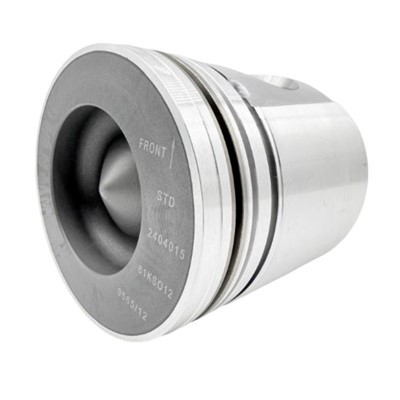
(1) Cylinder-by-Cylinder Fuel Cut-off. Use the cylinder-by-cylinder fuel cut-off method to determine the location of the knocking. If the sound significantly decreases or disappears when fuel is cut off to a particular cylinder, but a distinct "ticking" sound is heard when fuel supply is restored, it indicates that the piston in that cylinder is knocking.
(2) To further confirm piston knocking, remove the injector from that cylinder, add a small amount of CD-grade turbocharged engine oil (for sealing), reinstall the injector, start the engine, and if the knocking sound disappears or weakens, but reappears after a while, then the piston in that cylinder is undoubtedly knocking.
The main causes of piston knocking are as follows:
(1) The clearance between the piston and the cylinder wall is too large. The standard clearance between the piston skirt and the cylinder in the WD615 series engine is 0.143-0.182 mm, and the maximum wear limit is 0.35-0.40 mm.
(2) After the engine has been running for a period of time, wear occurs in the cylinder piston. Combined with poor lubrication, the clearance between the piston and cylinder increases due to wear, resulting in a significant step slightly below the first compression ring, causing the piston to knock against the cylinder and produce abnormal noise.
(3) After a period of operation, severe wear occurs in the piston skirt and cylinder, causing severe out-of-roundness and resulting in knocking.
(4) Some connecting rods deform due to various reasons, causing uneven piston wear, increased clearance, and knocking. Piston knocking leads to excessive fuel consumption, engine oil leakage, high oil consumption, and poor fuel economy. When piston knocking is severe, it can even break the piston, damage the cylinder, and lead to connecting rod breakage and cylinder block damage.