What is a Cylinder Liner Kit?
A cylinder liner kit contains the primary replacement components required to service and restore a single engine cylinder during a heavy-duty diesel engine rebuild or major overhaul. Because different manufacturers and aftermarket programs define kits differently, buyers should always verify exact kit contents rather than relying solely on product names.
Typical Cylinder Liner Kit Components & Technical Functions
Cylinder Liner (Sleeve)
Restores the running surface of the cylinder, ensures optimal heat dissipation, and maintains precise bore geometry.
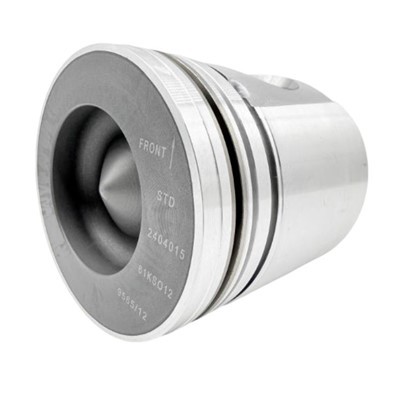
Piston
Replaces worn, heat-damaged, or out-of-spec pistons; matches combustion chamber geometry and compression requirements.
Piston Ring Set
Restores critical compression, controls oil film distribution, and prevents blow-by gases from entering the crankcase.
Piston Pin (Gudgeon Pin)
Connects the piston securely to the connecting rod under high reciprocating loads.
Retaining Rings (Circlips)
Axially secures the piston pin to prevent lateral contact and scoring against the cylinder wall.
Sealing Components
Includes liner cavitation protection seals, O-rings, and fluid-retention gaskets for the lower cylinder deck area.
-
![Piston & Liner Kit]() Piston & Liner KitProduct Introduction This piston kit consists of piston, piston rings, piston pin and cylinder liner – the four key components of an engine combustion chamber. Manufactured to OE specification, it is suitable for diesel and...view more
Piston & Liner KitProduct Introduction This piston kit consists of piston, piston rings, piston pin and cylinder liner – the four key components of an engine combustion chamber. Manufactured to OE specification, it is suitable for diesel and...view more

Cylinder Liner Kit Selection: Essential Data for Buyers
A reliable procurement process begins with precise engine and dimensional identification.

Engine Identification Checklist
When requesting a quotation, please provide the following technical data where possible:
Engine Manufacturer and Engine Series.
Engine Model and Configuration (Turbocharged, Intercooled, Emission Tier Level).
Application Type (Commercial Vehicles, Construction Machinery, Agricultural Equipment, or Industrial Stationary Engines).
Engine Serial Number or Specific Engine Family Code.
Existing Piston or Liner Part Numbers.
Original Equipment Manufacturer (OEM) Reference Numbers (if available).
Critical Dimensional Verification
If technical drawings or physical samples are available, verify these core parameters:
Bore and Outer Diameter (OD): Ensures correct press-fit or slip-fit installation into the engine block.
Liner Length and Flange Dimensions: Determines deck height clearance and proper seating depth in the block.
Piston Diameter and Compression Height: Controls top dead center (TDC) clearance and compression ratio.
Piston Pin Diameter and Length: Determines pin bore compatibility and whether a full-floating or press-fit setup is required.
Ring Groove Dimensions and Thickness: Guarantees proper ring-to-groove sealing and prevents ring sticking or micro-welding.

Typical Cylinder Liner Kit Configurations
Cylinder liner kits are generally supplied in modular component packages depending on overhaul requirements:
Option A
Liner + Piston + Piston Ring Set.
Option B
Liner + Piston + Piston Ring Set + Piston Pin + Circlips.
Option C
Complete Overhaul Kit (Includes dedicated liner shims, O-rings, and lower seals).
Application Scenarios
Cylinder liner kits support heavy-duty diesel maintenance across four major industrial sectors:
Commercial Vehicles
Heavy long-haul trucks, commercial transport vehicles, construction haulers, and municipal fleet units.
Construction Machinery
Excavators, wheel loaders, bulldozers, graders, and heavy material-handling equipment.
Agricultural Machinery
Heavy-duty tractors, combine harvesters, self-propelled sprayers, and agricultural power units.
Industrial Diesel Engines
Standby and prime power generator sets, industrial pump engines, and stationary compressor units.
Cylinder Liner Kits vs. Individual Engine Parts
|
Feature |
Sourcing Individual Parts |
Purchasing a Cylinder Liner Kit |
|
SKU Management |
Manages multiple part numbers and diverse suppliers. |
Streamlined under a single, comprehensive procurement package. |
|
Component Matching |
Higher risk of mixed tolerances or wear mismatches. |
Components are engineered and grouped as a matched tolerance set. |
|
Inventory Planning |
Complex purchasing, inspection, and logistics overhead. |
Simplifies warehouse stocking, kitting, and workflow processing. |
|
Pricing Structure |
Individual component pricing. |
Unified, volume-optimized kit pricing. |
Key Technical Factors for Buyers to Monitor
Piston Specifications
Must precisely match combustion chamber geometry and compression requirements. Pay close attention to crown bowl shapes, valve recess depths, pin bore alignment, and ring groove placement.
Cylinder Liner Specifications
Determines overall engine longevity. Verify whether the liner is wet or dry, centrifugal cast or alloy material, and inspect the plateau honing crosshatch angle, surface finish roughness, and flange seat dimensions.
Piston Ring Specifications
Never select rings based solely on the engine name. Verify ring profiles (trapezoidal, rectangular, barrel-faced), thickness tolerances, tension characteristics, and surface coatings (e.g., chrome plating or nitriding).
Material and Manufacturing Standards
Traceable technical data ensures reliable performance under extreme thermal and mechanical loads:
Pistons
High-silicon aluminum alloy specifications, precision casting or forging processes, thermal treatment, and micro-machining on crowns and ring grooves.
Cylinder Liners
Premium alloy cast iron, centrifugal casting, induction hardening, and plateau-honed surface finishing for optimal oil retention.
Piston Rings
High-strength alloy steel or ductile cast iron with specialized face coatings for wear resistance.

Quality Control (QC) Best Practices for Global Procurement
Effective inbound QC protocols should cover the following checkpoints:
Raw Material Verification
Cross-checking material test certificates with required alloy standards.
Machining Inspection
Using calibrated measuring equipment to verify bore size, pin bore, outer diameter, and flange thickness.
Surface Inspection
Validating liner crosshatch honing angles, piston coating integrity, and ring edge profiles.
Assembly Matching
Ensuring all components packed inside the same kit box belong to compatible tolerance classes.
Common Sourcing Challenges & Solutions
|
Sourcing Challenge |
Recommended Purchasing Response |
|
Correct engine model, wrong production version |
Always confirm the exact serial number range and engineering reference numbers before placing an order. |
|
Incomplete kit contents |
Request a detailed, itemized bill of materials (BOM) before approving the final quotation. |
|
Dimensional mismatch |
Cross-reference supplier technical data sheets directly against the OEM shop manual. |
|
Ring groove incompatibility |
Verify that piston ring thickness and profile configurations match groove tolerances precisely. |
|
Transit packaging damage |
Specify export-grade wooden crates, individual anti-corrosion wrapping, and secure internal bracing. |
Step-by-Step Procurement Workflow
Identify Engine Details
Determine the exact manufacturer, engine model, horsepower rating, and serial number range.
Determine Repair Scope
Decide whether partial replacement parts or a complete cylinder overhaul kit is required.
Confirm Kit Contents
Request that the supplier itemize every single component included in the kit package.
Cross-Check Dimensions & References
Compare bore sizes, compression heights, and part cross-references.
Request Technical Evidence
For bulk orders, request material test reports, dimensional inspection records, or pre-production samples.
Finalize Commercial Terms
Confirm minimum order quantities (MOQ), lead times, warranty terms, and custom private-label packaging options.
Frequently Asked Questions
As one of the most professional cylinder kit manufacturers and suppliers in China, we're featured by quality products and good service. Please rest assured to buy customized cylinder kit made in China here from our factory. Also, quotation is available.