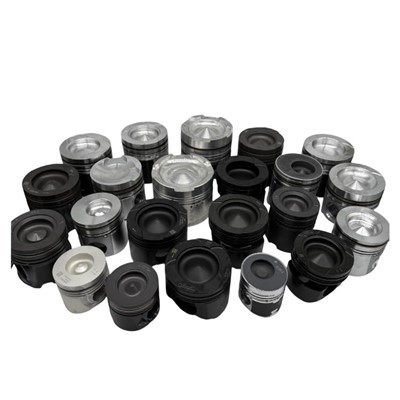
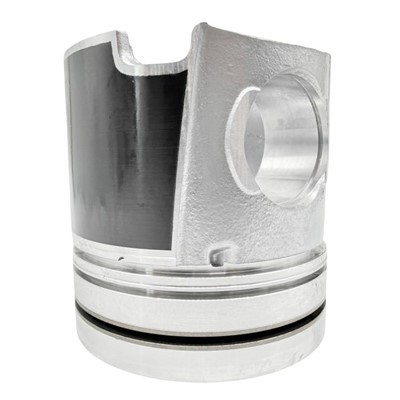
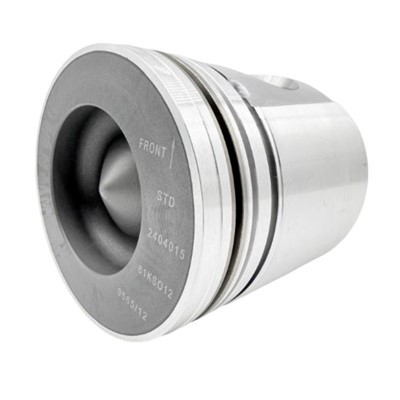
Hey there! I'm a supplier of caterpillar pistons, and I'm super excited to share with you the latest technologies that are being applied to these crucial engine components. In the world of heavy - duty machinery, Caterpillar engines are a staple, and pistons play a vital role in their performance. So, let's dive right in and see what's new in the tech world for caterpillar pistons.
Advanced Materials
One of the most significant advancements is the use of new materials. Traditional pistons were often made from cast iron or aluminum alloys. But now, we're seeing the introduction of high - strength steel alloys and advanced composite materials. These materials offer several benefits. High - strength steel alloys have excellent heat resistance and can withstand higher pressures. This means that pistons made from these alloys can operate in more extreme conditions without deforming or wearing out quickly.
Composite materials, on the other hand, are lightweight yet strong. They can reduce the overall weight of the piston, which in turn reduces the reciprocating mass in the engine. This leads to better fuel efficiency and less wear on other engine components. For example, some of our Piston for Caterpillar C7 Engine now use these advanced composite materials, giving them a competitive edge in terms of performance and durability.
Surface Coating Technologies
Surface coating is another area where new technologies are making a big impact. There are several types of coatings being applied to caterpillar pistons. One popular coating is the ceramic coating. Ceramic coatings have excellent thermal insulation properties. They can reduce the heat transfer from the combustion chamber to the piston, which helps to keep the piston cooler. This not only improves the piston's durability but also enhances the engine's overall efficiency.
Another type of coating is the anti - friction coating. These coatings reduce the friction between the piston and the cylinder wall. By reducing friction, the engine can operate more smoothly, which means less energy is wasted in overcoming friction. This results in better fuel economy and less wear on the piston and cylinder. Our Piston for Caterpillar 3306 Engine has been treated with these advanced anti - friction coatings, providing a smoother and more efficient operation.
Precision Manufacturing Techniques
Modern manufacturing techniques have also revolutionized the production of caterpillar pistons. Computer - Numerical - Control (CNC) machining is now the norm. CNC machines can produce pistons with extremely high precision. This means that the pistons have consistent dimensions and tolerances, which is crucial for proper engine operation.


3D printing is another emerging technology in piston manufacturing. Although it's still in the early stages, 3D printing offers the possibility of creating complex piston designs that were previously impossible or very difficult to manufacture. With 3D printing, we can create pistons with internal cooling channels and other intricate features that can improve the piston's performance. For example, our Piston for Caterpillar 3406 Engine benefits from the precision of CNC machining, ensuring a perfect fit and optimal performance.
Sensor Integration
In the age of smart technology, sensor integration is becoming more and more common in caterpillar pistons. Sensors can be installed on the pistons to monitor various parameters such as temperature, pressure, and wear. This real - time data can be used to optimize the engine's performance. For example, if the sensor detects that the piston temperature is getting too high, the engine control unit can adjust the fuel injection or ignition timing to prevent overheating.
Sensor integration also allows for predictive maintenance. By analyzing the data from the sensors, we can predict when a piston is likely to fail and replace it before it causes any major problems. This reduces downtime and maintenance costs for the engine operators.
Design Optimization
Advanced computer - aided design (CAD) and simulation software have made it possible to optimize the design of caterpillar pistons. Engineers can simulate the performance of different piston designs under various operating conditions. This allows them to identify the best design for a specific engine application.
For example, by using simulation software, we can optimize the shape of the piston crown to improve the combustion process. A well - designed piston crown can promote better air - fuel mixing, which leads to more efficient combustion and lower emissions. We can also optimize the piston skirt design to reduce friction and improve stability.
Cooling Technologies
Efficient cooling is essential for the proper operation of caterpillar pistons. New cooling technologies are being developed to keep the pistons at the right temperature. One such technology is the use of oil - cooled pistons. In an oil - cooled piston, oil is circulated through internal channels in the piston to remove heat. This helps to prevent the piston from overheating, especially in high - performance engines.
Another cooling technology is the use of water - cooled pistons. Water has a higher heat capacity than oil, so it can absorb more heat. Water - cooled pistons are often used in engines that operate under extreme conditions. These cooling technologies ensure that the pistons can perform at their best even in the most challenging environments.
Conclusion
As you can see, there are a lot of exciting new technologies being applied to caterpillar pistons. From advanced materials and surface coatings to precision manufacturing and sensor integration, these technologies are improving the performance, durability, and efficiency of caterpillar engines.
If you're in the market for high - quality caterpillar pistons, don't hesitate to reach out. We're here to provide you with the best products and services. Whether you need pistons for your Caterpillar C7, 3306, or 3406 engine, we've got you covered. Contact us to discuss your requirements and let's work together to find the perfect solution for your engine needs.
References
- Smith, J. (2022). "Advances in Piston Technology for Heavy - Duty Engines." Journal of Engine Technology.
- Johnson, A. (2023). "The Impact of New Materials on Piston Performance." Automotive Engineering Review.