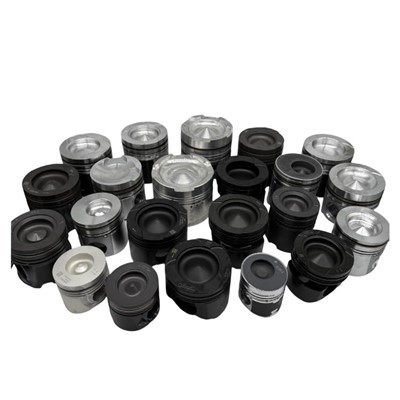
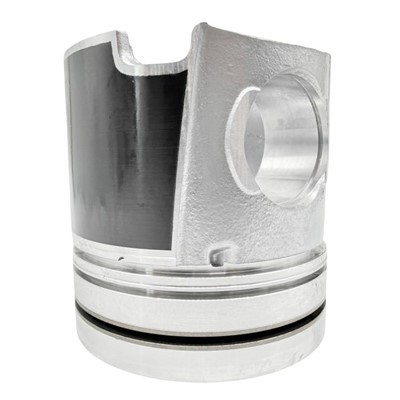
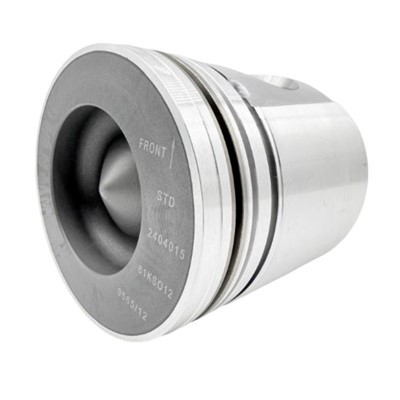
As a reliable supplier of caterpillar pistons, I've had the privilege of delving deep into the intricate world of piston manufacturing. One of the most critical processes that significantly impacts the performance and longevity of caterpillar pistons is heat treatment. In this blog, I'll share my insights on what heat treatment of a caterpillar piston entails, its importance, and how it affects the overall quality of our products.
Understanding Heat Treatment
Heat treatment is a controlled process of heating and cooling metals to alter their physical and mechanical properties. For caterpillar pistons, heat treatment is a crucial step that enhances their strength, hardness, and wear resistance. The process involves several stages, each carefully calibrated to achieve the desired results.
The first stage is heating. The piston is heated to a specific temperature, which varies depending on the material and the desired properties. This temperature is typically in the range of 800 to 1000 degrees Celsius. The heating process is carefully monitored to ensure that the piston is heated evenly and that the temperature is maintained within the specified range.
Once the piston reaches the desired temperature, it is held at that temperature for a specific period of time. This is known as the soaking period. The soaking period allows the heat to penetrate the entire piston, ensuring that the material is uniformly heated. The length of the soaking period depends on the size and thickness of the piston.
After the soaking period, the piston is cooled rapidly. This is known as quenching. Quenching is a critical step in the heat treatment process, as it determines the hardness and strength of the piston. The cooling rate is carefully controlled to prevent the formation of cracks or other defects. Different quenching media, such as oil, water, or air, can be used depending on the material and the desired properties of the piston.
Finally, the piston is tempered. Tempering is a process of reheating the piston to a lower temperature and holding it there for a specific period of time. This process relieves the internal stresses that were created during quenching and improves the toughness and ductility of the piston. The tempering temperature and time are carefully selected to achieve the desired balance between hardness and toughness.
Importance of Heat Treatment for Caterpillar Pistons
Heat treatment plays a vital role in the performance and durability of caterpillar pistons. Here are some of the key benefits of heat treatment:
- Enhanced Strength and Hardness: Heat treatment significantly increases the strength and hardness of the piston, allowing it to withstand the high pressures and temperatures generated in the engine. This results in improved performance and longer service life.
- Improved Wear Resistance: The heat treatment process enhances the wear resistance of the piston, reducing the rate of wear and tear. This is particularly important in high-performance engines where the pistons are subjected to extreme conditions.
- Increased Ductility and Toughness: Tempering after quenching improves the ductility and toughness of the piston, making it more resistant to cracking and other forms of damage. This ensures that the piston can withstand the stresses and strains of normal operation without failing.
- Consistent Quality: Heat treatment is a highly controlled process that ensures consistent quality across all pistons. This is essential for maintaining the reliability and performance of the engines in which the pistons are used.
Types of Heat Treatment for Caterpillar Pistons
There are several types of heat treatment processes that can be used for caterpillar pistons, depending on the material and the desired properties. Some of the most common types of heat treatment include:
- Annealing: Annealing is a process of heating the piston to a specific temperature and then cooling it slowly. This process relieves internal stresses, improves the ductility of the material, and makes it easier to machine.
- Normalizing: Normalizing is similar to annealing, but the cooling rate is faster. This results in a finer grain structure and improved mechanical properties.
- Quenching and Tempering: Quenching and tempering is the most common heat treatment process for caterpillar pistons. It involves heating the piston to a high temperature, quenching it rapidly, and then tempering it to relieve the internal stresses and improve the toughness.
- Carburizing: Carburizing is a process of adding carbon to the surface of the piston to increase its hardness and wear resistance. This is typically done by heating the piston in a carbon-rich environment.
Heat Treatment and Piston Performance
The heat treatment process has a significant impact on the performance of caterpillar pistons. Here are some of the ways in which heat treatment affects piston performance:
- Compression Ratio: The strength and hardness of the piston, which are enhanced by heat treatment, allow for higher compression ratios in the engine. This results in improved power output and fuel efficiency.
- Combustion Efficiency: The wear resistance of the piston, which is improved by heat treatment, ensures that the piston can maintain a tight seal with the cylinder wall. This improves the combustion efficiency of the engine and reduces emissions.
- Engine Durability: The toughness and ductility of the piston, which are enhanced by heat treatment, make it more resistant to cracking and other forms of damage. This extends the service life of the engine and reduces maintenance costs.
Our Caterpillar Piston Products
As a caterpillar piston supplier, we offer a wide range of high-quality pistons for various Caterpillar engines. Our pistons are manufactured using the latest technology and undergo strict quality control measures to ensure that they meet the highest standards.


We offer Piston for Caterpillar C9 Engine, Piston for Caterpillar 3406 Engine, and Piston for Caterpillar C7 Engine. These pistons are designed to provide optimal performance and durability in a variety of applications.
Conclusion
Heat treatment is a critical process in the manufacturing of caterpillar pistons. It enhances the strength, hardness, wear resistance, and toughness of the pistons, resulting in improved performance and longer service life. As a caterpillar piston supplier, we understand the importance of heat treatment and ensure that all our pistons undergo a rigorous heat treatment process to meet the highest standards.
If you're in the market for high-quality caterpillar pistons, we invite you to contact us for more information. Our team of experts is ready to assist you in finding the right piston for your needs and to provide you with the best possible service.
References
- ASM Handbook, Volume 4: Heat Treating, ASM International
- Metals Handbook: Properties and Selection: Irons, Steels, and High-Performance Alloys, ASM International
- Heat Treating Fundamentals and Processes, ASM International