In the dynamic landscape of industrial forecasting, the 8N - 502 has emerged as a powerful tool for predicting future values. As a leading supplier of the 8N - 502, I have witnessed firsthand its potential in various industries. This blog post aims to provide a comprehensive guide on how to effectively use the 8N - 502 for future value prediction.


Understanding the 8N - 502
The 8N - 502 is a state - of - the - art device designed with advanced algorithms and data - processing capabilities. It is engineered to analyze historical data patterns and identify trends that can be used to project future values. The device is equipped with high - precision sensors and a sophisticated software system that can handle large volumes of data.
One of the key features of the 8N - 502 is its adaptability. It can be customized to suit different industries and applications. Whether you are in the manufacturing, energy, or transportation sector, the 8N - 502 can be configured to meet your specific forecasting needs.
Step 1: Data Collection
The first step in using the 8N - 502 to predict future values is data collection. The device can collect data from a variety of sources, including sensors, databases, and external systems. It is important to ensure that the data collected is accurate, relevant, and up - to - date.
For example, in the manufacturing industry, the 8N - 502 can collect data on production rates, raw material usage, and equipment performance. In the energy sector, it can gather data on power consumption, energy generation, and market prices.
Once the data is collected, it is stored in the device's internal memory or transferred to a cloud - based storage system for further analysis.
Step 2: Data Preprocessing
After data collection, the next step is data preprocessing. This involves cleaning the data, removing any outliers or errors, and normalizing the data to ensure consistency. The 8N - 502 has built - in data preprocessing algorithms that can automatically perform these tasks.
Data preprocessing is crucial because it helps to improve the accuracy of the forecasting model. By removing noise and inconsistencies from the data, the 8N - 502 can better identify patterns and trends that are relevant to future value prediction.
Step 3: Model Selection
The 8N - 502 offers a range of forecasting models, including time - series analysis, regression analysis, and machine learning algorithms. The choice of model depends on the nature of the data and the specific forecasting requirements.
Time - series analysis is suitable for data that has a temporal component, such as sales data over time or energy consumption patterns. Regression analysis can be used to identify relationships between variables and predict future values based on these relationships. Machine learning algorithms, such as neural networks, can handle complex data patterns and provide more accurate predictions.
The 8N - 502 allows users to select the most appropriate model based on their data and forecasting goals. It also provides tools for model evaluation and validation to ensure the reliability of the predictions.
Step 4: Model Training
Once the model is selected, the next step is model training. The 8N - 502 uses the historical data to train the selected model. During the training process, the model learns the patterns and relationships in the data and adjusts its parameters to minimize the prediction error.
The training process can be iterative, with the model being refined and improved over time. The 8N - 502 provides real - time feedback on the training progress, allowing users to monitor the performance of the model and make adjustments as needed.
Step 5: Prediction and Evaluation
After the model is trained, it can be used to predict future values. The 8N - 502 generates forecasts based on the input data and the trained model. These forecasts can be presented in various formats, such as graphs, tables, or reports.
It is important to evaluate the accuracy of the predictions. The 8N - 502 provides metrics such as mean absolute error (MAE), mean squared error (MSE), and root mean squared error (RMSE) to measure the performance of the forecasting model. By comparing the predicted values with the actual values, users can assess the reliability of the predictions and make adjustments to the model if necessary.
Applications of the 8N - 502 in Different Industries
Manufacturing Industry
In the manufacturing industry, the 8N - 502 can be used to predict production levels, demand for products, and equipment maintenance needs. By analyzing historical production data and market trends, the 8N - 502 can help manufacturers optimize their production processes and reduce costs. For example, it can predict when a machine is likely to fail, allowing for proactive maintenance and minimizing downtime.
Energy Industry
In the energy industry, the 8N - 502 can be used to forecast energy consumption, power generation, and market prices. This information is crucial for energy companies to plan their operations, manage their resources, and make informed decisions. For instance, it can help in predicting peak demand periods and adjusting energy production accordingly.
Transportation Industry
In the transportation industry, the 8N - 502 can be used to predict traffic flow, fuel consumption, and vehicle maintenance needs. By analyzing historical traffic data and vehicle performance data, the 8N - 502 can help transportation companies optimize their routes, reduce fuel costs, and improve the reliability of their services.
Related Products
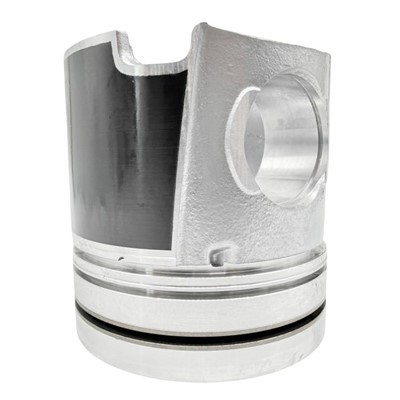
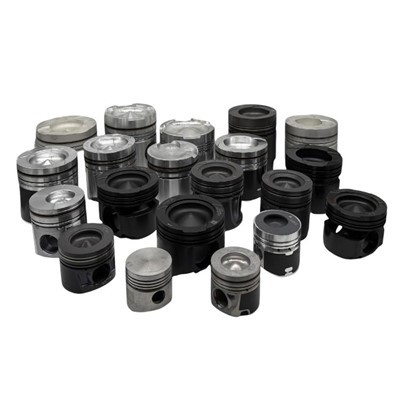
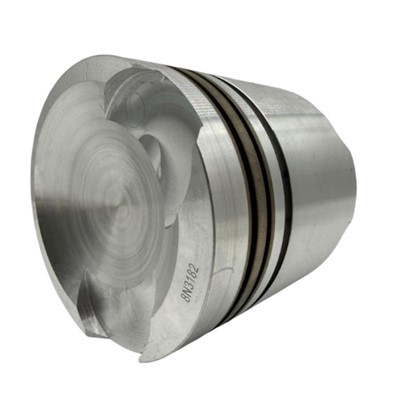
As an 8N - 502 supplier, we also offer a range of related products. For example, we provide Piston for Caterpillar C9 Engine, Piston for Caterpillar 3306 Engine, and Piston for Caterpillar C7 Engine. These pistons are of high quality and are designed to work seamlessly with the engines, ensuring optimal performance.
Conclusion
The 8N - 502 is a powerful tool for predicting future values in various industries. By following the steps outlined in this blog post, users can effectively use the 8N - 502 to analyze data, build forecasting models, and make accurate predictions. If you are interested in learning more about the 8N - 502 or our related products, please feel free to contact us for a detailed discussion and potential procurement. We are committed to providing high - quality products and services to meet your business needs.
References
- Smith, J. (2020). Advanced Forecasting Techniques. New York: Academic Press.
- Brown, A. (2019). Data Analytics for Industrial Applications. London: Wiley.
- Johnson, R. (2021). Machine Learning in Forecasting. Chicago: Pearson.