When dealing with a linear function like (y = 8N - 3182), understanding its properties and how to find the maximum value (if applicable) is crucial, especially for a supplier like myself. In this blog, I'll delve into the details of this function, analyze its behavior, and discuss the concept of maximum values in the context of the business I'm in.
Understanding the Linear Function (y = 8N - 3182)
A linear function is of the form (y=mx + b), where (m) is the slope and (b) is the y - intercept. In the function (y = 8N - 3182), the slope (m = 8) and the y - intercept (b=-3182).
The slope of a linear function determines its direction. A positive slope, as in our case ((m = 8>0)), indicates that the function is increasing. This means that as the value of (N) increases, the value of (y) also increases.
The Concept of Maximum for a Linear Function
For a linear function with a non - zero slope, there is no maximum value in the entire real number domain. Since the function (y = 8N - 3182) has a positive slope ((m = 8)), as (N) approaches positive infinity, (y) also approaches positive infinity.
However, in a real - world business context, there are usually constraints. For example, if (N) represents the number of products I supply as an 8N - 3182 supplier, there are limitations such as production capacity, market demand, and available resources.
Let's assume that there is an upper bound on (N) due to production capacity. Say, the maximum number of units I can produce is (N_{max}=1000). To find the value of (y) at this upper bound, we substitute (N = 1000) into the function (y = 8N - 3182).
[y=8\times1000 - 3182=8000 - 3182 = 4818]
In this case, when (N = 1000), the function (y) reaches its maximum value within the constraints of our production capacity.
Business Implications
As an 8N - 3182 supplier, understanding the behavior of this function is essential for making informed business decisions. For instance, if we want to maximize our revenue (represented by (y)), we need to balance the production quantity ((N)) with the associated costs and market demand.
If the cost of production per unit is (C) and the selling price per unit is (P), our profit function (P_{r}) can be written as (P_{r}=(P - C)N-3182). To maximize profit, we need to find the optimal value of (N) considering factors such as production capacity, market demand, and cost structure.
Related Products
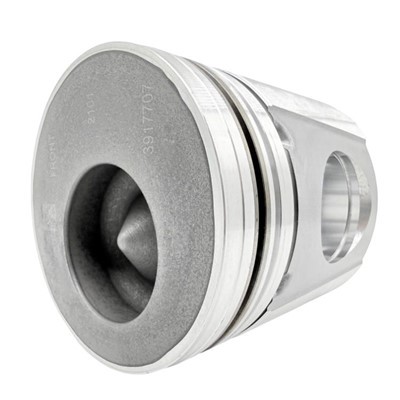
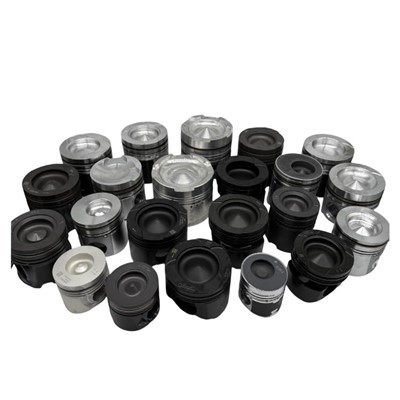
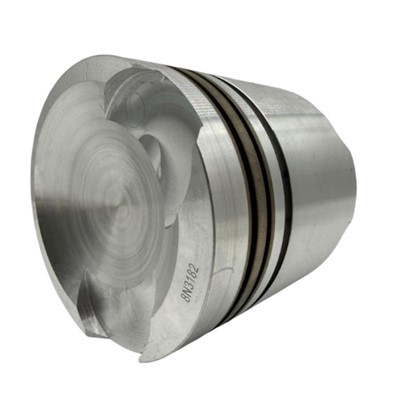
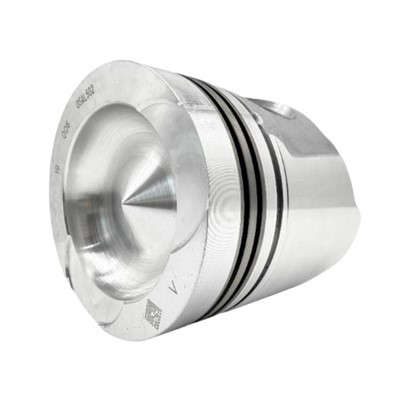
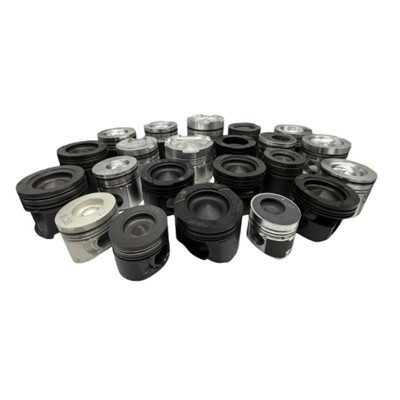
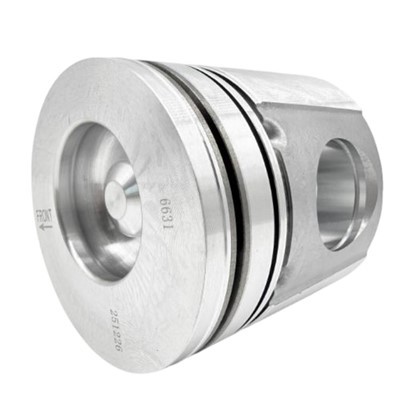
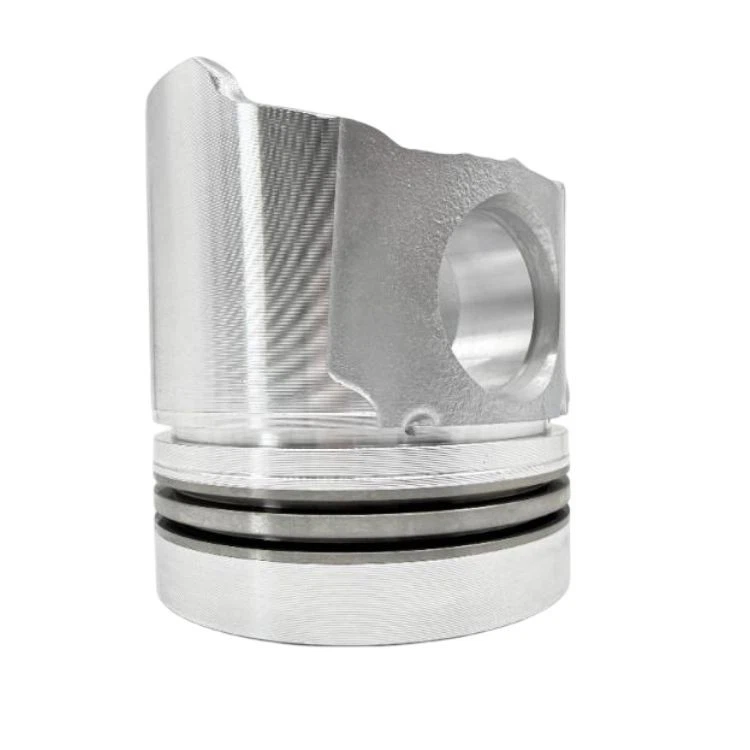
In addition to the 8N - 3182 products, I also supply pistons for various Caterpillar engines. These products are of high quality and are designed to meet the specific requirements of different engines. You can find more information about these products through the following links:
- Piston for Caterpillar 3406 Engine
- Piston for Caterpillar C7 Engine
- Piston for Caterpillar 3306 Engine
Conclusion and Call to Action
In conclusion, while the linear function (y = 8N - 3182) has no maximum in the real - number domain, in a business context, we can find a maximum value by considering constraints such as production capacity and market demand.
If you are interested in our 8N - 3182 products or the Caterpillar pistons we supply, I encourage you to reach out for a purchase negotiation. We are committed to providing high - quality products and excellent customer service. Let's work together to meet your needs and achieve mutual success.

References
- Stewart, J. (2015). Calculus: Early Transcendentals. Cengage Learning.
- Simon, C. P., & Blume, L. (1994). Mathematics for Economists. W. W. Norton & Company.