Hey there! As a supplier of products related to the function 8N - 3102, I often get asked about how to analyze the behavior of this function as N approaches infinity. In this blog, I'm gonna break it down for you in a simple and easy - to - understand way.
First off, let's understand what the function 8N - 3102 represents. Here, N is a variable, and it can take on different values. The function 8N - 3102 is a linear function, which means it has a straight - line graph. The general form of a linear function is y = mx + b, where m is the slope and b is the y - intercept. In our function 8N - 3102, if we think of it as y = 8N - 3102, the slope m is 8, and the y - intercept b is - 3102.
Now, let's talk about what happens when N approaches infinity. When we say N approaches infinity, we mean that N is getting larger and larger without any bound. To figure out the behavior of the function 8N - 3102 as N approaches infinity, we can use some basic concepts of limits.
The limit of a function f(N) as N approaches infinity is written as lim(N→∞) f(N). For our function f(N)=8N - 3102, we can find the limit as follows:

lim(N→∞)(8N - 3102)
We know that the limit of a sum or difference of functions is equal to the sum or difference of their limits. That is, lim(N→∞)(8N - 3102)=lim(N→∞)(8N)-lim(N→∞)(3102)
The limit of a constant function, like 3102, as N approaches infinity is just the constant itself. So, lim(N→∞)(3102) = 3102.
For the function 8N, as N gets larger and larger, 8N also gets larger and larger. In fact, lim(N→∞)(8N)=∞ because as N goes to infinity, 8 times N will also go to infinity.
So, lim(N→∞)(8N - 3102)=∞ - 3102. Since subtracting a constant from infinity still gives us infinity, lim(N→∞)(8N - 3102)=∞
What does this mean in a practical sense? Well, as N (which could represent something like the number of units produced, or the number of customers, etc.) gets larger and larger, the value of the function 8N - 3102 also increases without bound.
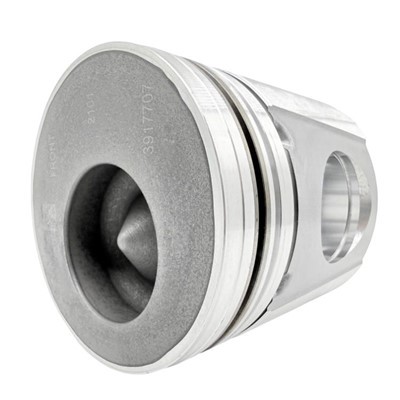
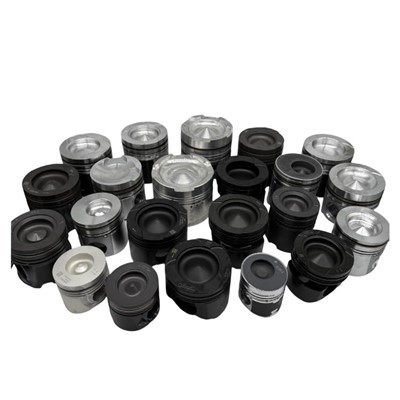
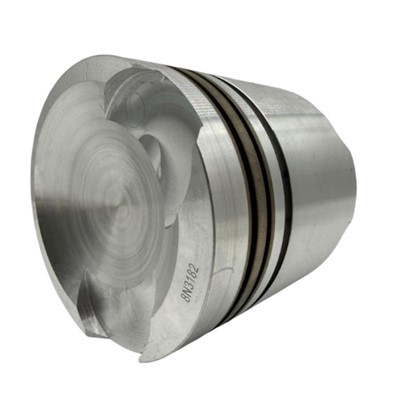
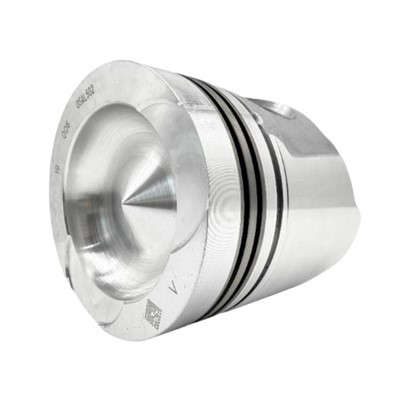
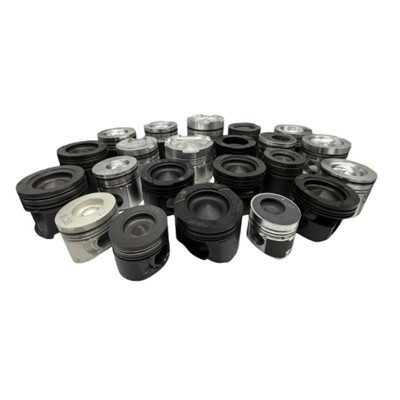
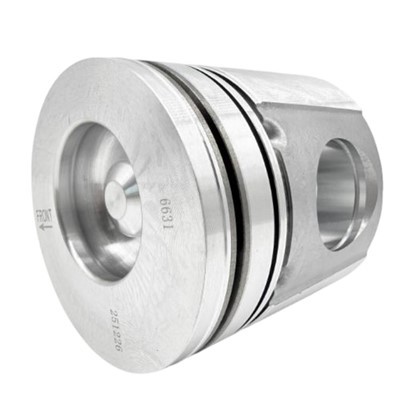
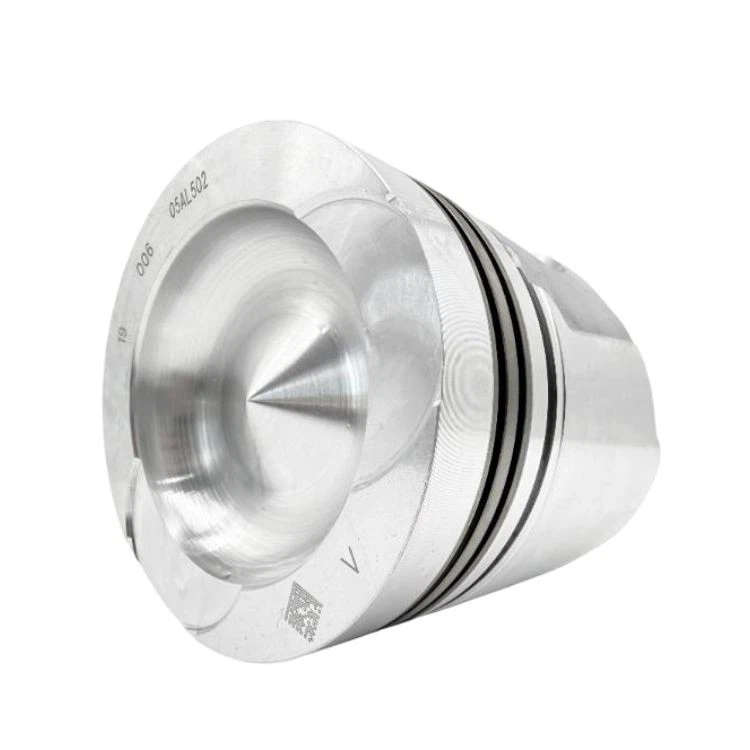
Now, let me tell you a bit about our products. We are a supplier of parts related to the 8N - 3102 concept. For example, we have high - quality pistons for different engines. You can check out our Piston for Caterpillar C7 Engine, Piston for Caterpillar 3406 Engine, and Piston for Caterpillar 3306 Engine. These pistons are designed to meet the highest standards of quality and performance.
As the number of engines in use (which could be our variable N) increases, the demand for these pistons also increases. Just like the function 8N - 3102, as N (number of engines) goes to infinity, the need for our pistons also grows.
If you're in the market for these kinds of parts, we'd love to have a chat with you. Whether you're a small - scale repair shop or a large - scale manufacturing plant, we can provide you with the right products at the right price. We understand the importance of reliable parts in the industry, and we're committed to delivering the best.
So, if you're interested in our products, don't hesitate to reach out. We're here to help you with all your piston and related part needs. Let's have a discussion about how we can work together to meet your requirements.
In conclusion, analyzing the function 8N - 3102 as N approaches infinity gives us an understanding of how the function behaves as the variable gets larger. And in our business, it helps us anticipate the growth in demand for our products as the market expands. So, if you're looking for quality parts, get in touch with us, and let's start a great partnership.
References:
- Basic calculus textbooks for limit concepts
- Industry reports on engine parts demand